One of the biggest advantages of artificial turf is that it requires far less routine maintenance than natural grass. There is no mowing, reseeding, or regular fertilizing needed to keep synthetic grass green. But low-maintenance does not mean maintenance-free.
San Diego’s dry conditions, dust, sun exposure, wind, pets, and everyday foot traffic can all affect the appearance of an artificial turf lawn. A simple maintenance routine can help keep the fibers standing upright, remove debris, and keep the surface looking clean.
For San Diego homeowners, maintaining artificial turf is generally about keeping the surface clean and addressing small issues before they become bigger problems.
Leaves, twigs, dirt, pollen, and other debris can accumulate on artificial turf, particularly after windy weather or seasonal changes. Leaving organic debris on the surface for long periods can contribute to buildup and make the lawn look less tidy.
A leaf blower, soft rake, or other appropriate lawn-cleaning tool can be used to remove loose debris. When using a rake or brush, choose one that is suitable for synthetic turf rather than using metal bristles that could damage the fibers.
San Diego’s dry climate makes this especially useful because dust and fine debris can settle into the turf between rain events. Regularly clearing the surface helps maintain a cleaner, more natural-looking lawn.
Occasional rinsing is one of the simplest ways to freshen artificial turf. A garden hose can help remove dust, pollen, loose dirt, and other particles that accumulate between deeper cleanings.
How often you need to rinse depends on your property. A lawn surrounded by trees, exposed to significant dust, or used frequently may need more attention than a lightly used backyard.
Rinsing can also be particularly useful after periods of windy weather. San Diego’s Santa Ana conditions can bring additional dust and debris into outdoor spaces, making a quick rinse a useful part of seasonal yard care.
The City of San Diego encourages residents to conserve water and follow permanent water-use restrictions, so rinsing should be targeted rather than treated like watering a natural lawn.
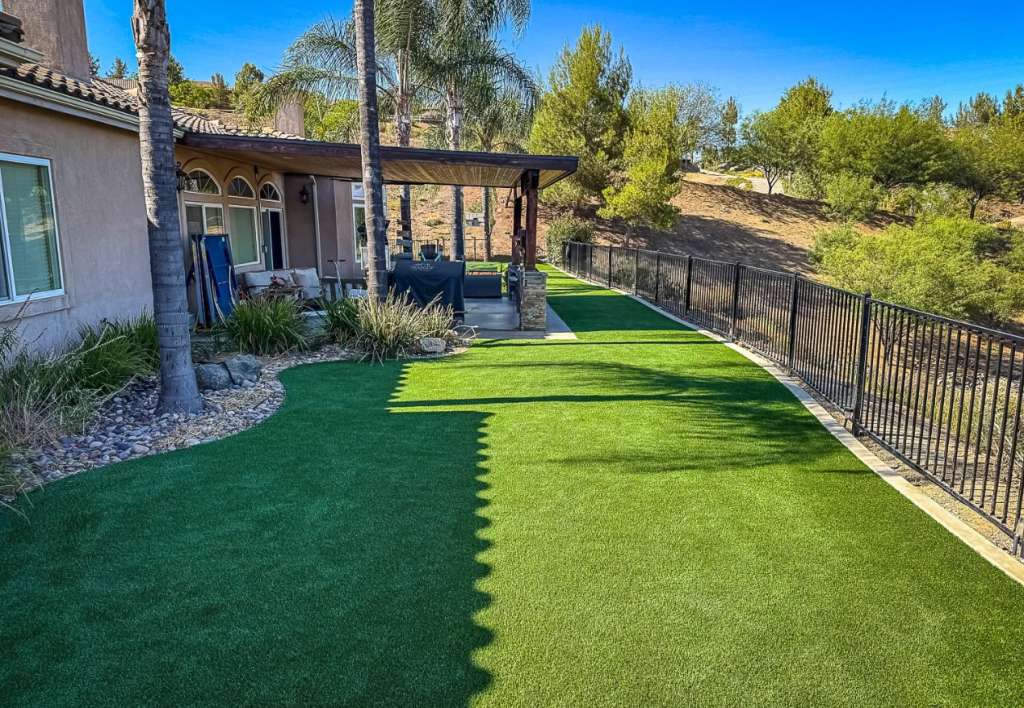
Artificial turf fibers can become flattened over time in areas that receive frequent foot traffic. This is normal, particularly around walkways, entrances, play areas, and other heavily used parts of the yard.
Occasional brushing can help lift the fibers and restore a more upright appearance. A stiff-bristled broom or turf brush can be used, but avoid tools that could cut, pull, or otherwise damage the turf fibers.
Pay particular attention to areas where people regularly walk or where outdoor furniture is frequently placed. Moving furniture occasionally can also help prevent prolonged pressure on one section of the turf.
Regular grooming is a simple way to help maintain the finished appearance of your artificial lawn.
Artificial turf can be a convenient option for households with dogs, but pet areas require their own maintenance routine.
Solid waste should be removed promptly. Afterward, the affected area can be rinsed with water to help keep the surface clean. High-use pet areas may need more frequent rinsing than other parts of the lawn.
If odors develop, homeowners should use a cleaning product specifically designed for artificial turf and follow the turf manufacturer’s recommendations. Avoid automatically reaching for harsh household chemicals, bleach, or ammonia-based cleaners, as unsuitable products can damage turf materials or create other problems.
Pet-friendly artificial turf systems also depend on proper drainage. If you notice persistent odors, standing water, or drainage problems, it may be worth having the installation inspected rather than simply applying more cleaning products.
Backyard turf can become a gathering place for family meals, parties, pets, and outdoor activities, so spills are bound to happen.
The best approach is to clean spills before they have time to dry or become more difficult to remove. For many everyday messes, mild soap mixed with water and gentle cleaning can be sufficient. Always check the care recommendations for your specific turf product before using a cleaning solution.
Avoid abrasive tools or harsh chemicals that could damage the fibers, backing, or infill. If a stain is difficult to remove, professional turf cleaning may be a better option than experimenting with increasingly aggressive products.
Artificial turf greatly reduces the need for traditional lawn maintenance, but weeds can still appear around edges, seams, landscaping borders, or nearby planting areas.
Keeping surrounding landscape areas maintained can help reduce the amount of organic material that reaches the turf. If weeds do appear, remove them carefully and determine where they are coming from before applying any treatment.
Do not assume that every weed-control product is safe for synthetic turf. Check the manufacturer’s recommendations before applying chemicals near the turf, particularly around seams, edging, drainage areas, and planting beds.
Regular visual inspections can help homeowners catch small issues early.
Look for areas where the turf appears to be lifting, seams are becoming visible, edges have shifted, or the surface is no longer draining as expected. Also check areas around hardscape features, gates, planting beds, and other transition points.
Proper drainage is particularly important for artificial turf. A well-designed installation should allow water to move through the surface and underlying base appropriately, but blocked drainage or changes to the surrounding landscape can affect performance.
If you notice standing water after normal rainfall or rinsing, don’t simply add more water to the area. Have the drainage issue evaluated so the underlying cause can be identified.
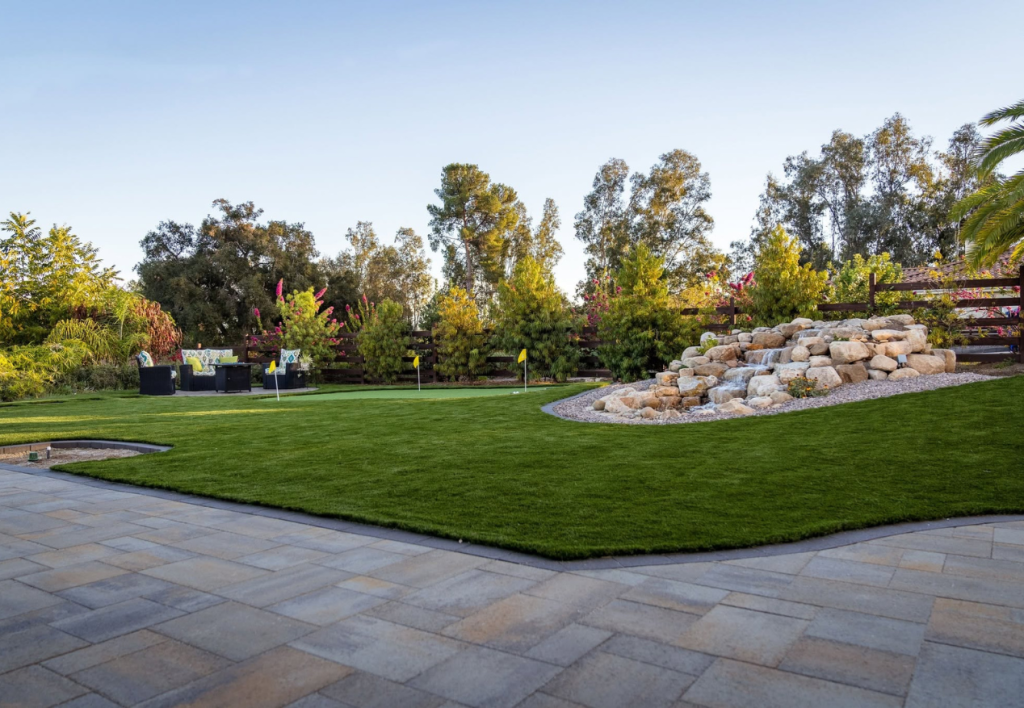
There is no single maintenance schedule that applies to every San Diego yard. The right frequency depends on factors such as the amount of foot traffic, number of pets, surrounding vegetation, dust exposure, and how much debris reaches the turf.
A simple routine can look like this:
The goal is consistency rather than complicated lawn care. A few minutes of routine attention can help keep artificial turf clean and looking its best.
Artificial turf can significantly reduce the routine work associated with maintaining a traditional lawn, but proper care still matters. Regular debris removal, occasional rinsing, brushing, pet cleanup, and visual inspections can help preserve the appearance and functionality of your turf.
San Diego’s emphasis on water conservation also makes it important to use water thoughtfully. The City maintains year-round mandatory water-use restrictions and encourages residents to reduce unnecessary outdoor water use.
If you’re considering artificial turf for your San Diego home, Evo Turf & Pavers can help you create an outdoor space designed around your lifestyle. From artificial turf lawns and pet-friendly spaces to putting greens and custom paver installations, our team can help you plan a finished landscape that is built for everyday use.
Ready to upgrade your outdoor space? Contact Evo Turf & Pavers today to discuss your artificial turf or paver project and get started.